Tuesday, 25 November 2008
Design for the Post Nuclear Family
I have also been working on developing some products for the post nuclear family. I think there is a certain amount of guilt associated with a couple who have children together breaking up nowadays, even though it is now completely normal. I think if products were available, either for the child, the parent or the house it would make the parents feel better. Parents often go on to start other families after a breakup, with each set of children having a large age gap in-between. This means they often have to alter aspects of their identity when dealing with each family. I think this is an interesting example of identity swapping occurring naturally, and it would be interesting to intervene and try to encourage this swapping.

Monday, 24 November 2008
I am James Bond.
I have begun to think that it would be interesting to find ways in which average people can become fantasy figures, if they could swap their identity for a day or more, to be someone who is more confident, interesting, or has some personality features that they don’t, and wish they had. I don’t want to allow someone to get rid of their identity, I want to create a sort of ‘Identity tourism’ where the user could swap identity to try out a new personality, or maybe use their identity to do something that they don’t want to, or couldn’t do on their own. The person will always be able to swap back to their personality again, like a holiday where you can return home.
What if everyone could be James Bond for a period of time? How could this be done? I decided to use him because he is a fictional character (so his public image and personality is harder to be ‘tarnished’ than a real person’s is), he is well known (so a number of people would know what he is like without having to have a personality explained to them first) and he has a desirable personality.
I will look into what constitutes James Bond. When I have researched this through experimentation I will try and create methods of applying James Bond to people.
Saturday, 15 November 2008
The Android is a Human
I have recently been thinking about the implications of digital identity. Although this wasn’t a path I originally wanted to explore ( I felt it was very broad and has been extensively explored through various design disciplines already) I find the need to digitally document our entire life interesting. Philip K Dick says in his speech ‘The Android and the Human’ (1972)
“It is the tendency of the so-called primitive mind to animate its environment. Modern depth psychology has requested us for years to withdraw these anthropomorphic projections from what is actually inanimate reality, to introject -- that is, to bring back into our own heads -- the living quality which we, in ignorance, cast out onto the inert things surrounding us.”
In the world of today an infinite amount of ourselves, of our identity, can be stored on the internet for all to see. What would the implications be if the record of our identity we have spent so long pouring into the artificial constructs that surround us was to be lost? How would we survive in a world without a digital identity? I am not interested in a world where the internet, and all computer systems fail. I want to investigate the possibility, and subsequent consequences of the collective identity stored on the internet being lost forever.
Sunday, 9 November 2008
First map
I have recently become interested in the different layers of identity, and how they can be organised. After doing some research and looking over some of my previous ideas to see which ‘areas’ I have been working in, I have come up with a map, organised from the most phsycoligically inherent ‘layers of identity’ in the middle, to the more changeable ones on the outside (it is the outside area I think I will mainly be working in) The central three circles are also the most ‘fixed’ in the physicality of the body, these are very hard to affect or change using design. I wonder if it would benefit my project to investigate these areas further. I may refine this map before turning it into a large scale map of my territory. I think that the outer two areas may well be the only ones I work in, so it may be more useful for a map showing my project to divide these sections more carefully, and make them into another map.


Sunday, 2 November 2008
This Week I Also...


Made some art for Off Modern
and some for Loud and Quiet magazine
I will put these on the website as soon as I can.
I am also reading House of Leaves, I recommend it.
Identity Transplanting
After a week of drawing I will be focusing on transplanting identity, and how people can be branded. I wanted to steer away from branding in terms of looks, for example what people wear or the tattoos they have, and focus more on less obvious areas in which identity can exist.
PERCEPTION
By this I mean how we present our identity to others, for example through subconscious actions, and how we perceive ourselves.
Putting personal meaning into an object is not something that a designer can often do, it is something happens naturally, is independent process and can’t be created by a design. I developed my ideas with this in mind.
I want to see what happens if you try to change someone's self perception. Would this count as altering their identity? Since drawing week I have been interested in the concept of heroism. I have a friend who has been feeling a bit down recently, and I thought that if she could see herself more as a hero then it would help her feel better. I have contacted as many people as I can that know her, and asked them to tell me the nicest thing she has ever done for them. I plan to make this into a book, and give it to her as a present and document her reaction. The product, and most valuable part of this experiment will not be the book, but her reaction, and the book's effect (if any) on her personality.
In a sense I am trying to put meaning into an object, which is only possible because I know her. I would like to carry on the idea of individual heroism, it would be interesting to develop the idea so it would work for people who I have no connection with.
POSSESSIONS
“The inner space of the 21st century is more likely to be found within the walls of their own cave than in some hidden corner of the soul”
- Roberto Feo, Rosario Hurtado, Diego San Martin: Nowhere/Now/Here
Objects, and the environment a person creates for themselves forms their identity, and ultimately 'brands' them. If I could find a way to swap or change people’s treasured possessions, I could go some way to swapping or changing a person’s identity.
 I overheard a conversation about someone the person knew who had a big family, and wanted them to think that they were all the most important to her. Whenever they all came round she would swap the photos on the mantelpiece, bringing the photos of whoever was visiting at that time to the front.
Today people often have two or more ‘sets’ of families, due to divorce and remarriage. Double sided photo frames spin round and display the photo on the other side, making it easier to ‘swap’ from family to family.
This idea developed into a mantelpiece for a semi detached house, where the fireplace and chimney are often shared, and are places where lots of ornaments and photos are displayed. A conveyor belt would swap the two neighbours possessions, ornaments and photos that are displayed above the fireplace.
I would like to find ways of changing the whole of a person’s surroundings, their environment, and perceived environment to investigate this further. Would changing whole environments facilitate identity swapping better? How effective is a person's environment, away from the home in facilitating identity transplants?
I had an idea for an apartment block, where the locks would randomly swap, so when the person came home their key would only access the person living next door’s flat, and they would have to live as that person, wear their clothes and eat their food, until the locks swapped again, and they would move onto the next flat, and so on. This idea presents obvious testing problems, but is an interesting research area.
I plan to look further into how the processes and usages surrounding personal possessions can be manipulated to encourage or facilitate identity swapping.
LEGAL IDENTITY
In today’s world anything can be bought and sold, as long as someone owns it in the first place. If I can legally own my identity, then I could swap it, give it away, or sell it, and in the eyes of the law transplant, swap, or get rid of my own identity.
I could legally cover most aspects of my identity. I could protect the things I create with a copyright, I can register my name as a trademark, I can protect how I look with design protection, and I could patent how I work and what I do, as long as my 'invention' fits the required specifications.
“Patent law requires that any invention must be novel (never have been made public before), inventive (not obvious to someone with a good knowledge of the subject), useful (could be turned into an industrial product, for example) and not excluded (discoveries, theories and works of art are amongst those excluded).”
- www.ipo.gov.uk
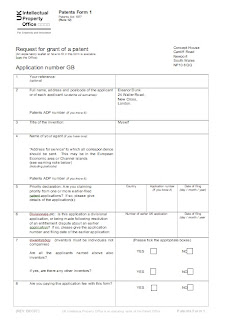 This project would not be about what identity is worth, it would be a way to swap or transplant identity using a system in which anything can be bought. I want to see if it is possible to patent myself. Patenting identity in Britain has only been tested once that I know of, by the poet Donna Maclean in 2000.
PERCEPTION
By this I mean how we present our identity to others, for example through subconscious actions, and how we perceive ourselves.
Putting personal meaning into an object is not something that a designer can often do, it is something happens naturally, is independent process and can’t be created by a design. I developed my ideas with this in mind.
I want to see what happens if you try to change someone's self perception. Would this count as altering their identity? Since drawing week I have been interested in the concept of heroism. I have a friend who has been feeling a bit down recently, and I thought that if she could see herself more as a hero then it would help her feel better. I have contacted as many people as I can that know her, and asked them to tell me the nicest thing she has ever done for them. I plan to make this into a book, and give it to her as a present and document her reaction. The product, and most valuable part of this experiment will not be the book, but her reaction, and the book's effect (if any) on her personality.
In a sense I am trying to put meaning into an object, which is only possible because I know her. I would like to carry on the idea of individual heroism, it would be interesting to develop the idea so it would work for people who I have no connection with.
POSSESSIONS
“The inner space of the 21st century is more likely to be found within the walls of their own cave than in some hidden corner of the soul”
- Roberto Feo, Rosario Hurtado, Diego San Martin: Nowhere/Now/Here
Objects, and the environment a person creates for themselves forms their identity, and ultimately 'brands' them. If I could find a way to swap or change people’s treasured possessions, I could go some way to swapping or changing a person’s identity.
 I overheard a conversation about someone the person knew who had a big family, and wanted them to think that they were all the most important to her. Whenever they all came round she would swap the photos on the mantelpiece, bringing the photos of whoever was visiting at that time to the front.
Today people often have two or more ‘sets’ of families, due to divorce and remarriage. Double sided photo frames spin round and display the photo on the other side, making it easier to ‘swap’ from family to family.
This idea developed into a mantelpiece for a semi detached house, where the fireplace and chimney are often shared, and are places where lots of ornaments and photos are displayed. A conveyor belt would swap the two neighbours possessions, ornaments and photos that are displayed above the fireplace.
I would like to find ways of changing the whole of a person’s surroundings, their environment, and perceived environment to investigate this further. Would changing whole environments facilitate identity swapping better? How effective is a person's environment, away from the home in facilitating identity transplants?
I had an idea for an apartment block, where the locks would randomly swap, so when the person came home their key would only access the person living next door’s flat, and they would have to live as that person, wear their clothes and eat their food, until the locks swapped again, and they would move onto the next flat, and so on. This idea presents obvious testing problems, but is an interesting research area.
I plan to look further into how the processes and usages surrounding personal possessions can be manipulated to encourage or facilitate identity swapping.
LEGAL IDENTITY
In today’s world anything can be bought and sold, as long as someone owns it in the first place. If I can legally own my identity, then I could swap it, give it away, or sell it, and in the eyes of the law transplant, swap, or get rid of my own identity.
I could legally cover most aspects of my identity. I could protect the things I create with a copyright, I can register my name as a trademark, I can protect how I look with design protection, and I could patent how I work and what I do, as long as my 'invention' fits the required specifications.
“Patent law requires that any invention must be novel (never have been made public before), inventive (not obvious to someone with a good knowledge of the subject), useful (could be turned into an industrial product, for example) and not excluded (discoveries, theories and works of art are amongst those excluded).”
- www.ipo.gov.uk
 This project would not be about what identity is worth, it would be a way to swap or transplant identity using a system in which anything can be bought. I want to see if it is possible to patent myself. Patenting identity in Britain has only been tested once that I know of, by the poet Donna Maclean in 2000.
Sunday, 26 October 2008
Drawing Week
This week I drew. Many of my ideas are half formed, or concepts to explore, and not necessarily things that could be made. I have decided to look into the area of identity. One area I want to look at is how individual identity is connected to the body. I think it is possible in today’s world for one’s identity to become more and more detached from the body, the two are and always have been very separate entities, but I want to research the effects that begin when the two entitles cease to be linked, or when the individual becomes disgusted, or struggles to accept their own body. I will look into the work of Susan Bordo, at first, as I am particularly interested in her theory that disorders such as anorexia and bulimia are linked to the individual’s wish to have complete control of, and therefore be able to transcend the body, and eventually detach from it completely. I will read her collection of essays “Unbearable weight: Feminism, Western Culture, and the Body” This idea could branch out into the realm of existentialism, which I am also interested in.
Another area of interest to me is how identity relates to the body, and how important/ vital to identity the body actually is. I was reminded of the part in Philip K Dick’s “Do Androids Dream of Electric Sheep’ when a simulation is used to encourage group solidarity. The person puts on an electronic mask, and is then linked up with people, all working together as one man pushing a huge rock up a steep hill. The man will never reach the top, and the people using the simulation are all well aware of this. I want to use this as a starting point to look into group solidarity, and how it affects the individuals’ identity. I plan to read ‘The Man in the High Castle’ by Philip K Dick, as well as ‘The Hero With A Thousand Faces’ by Joseph Campbell.
I thought of a syndrome this week, and named it ‘Phantom minds’ It is based on the way that when a person loses a limb, they can still feel it, they still believe it is there, and it is only seeing that the limb is missing that reminds them it is not. I wonder if people today suffer from phantom mind syndrome, where the mind seems to be there, we seem to have an identity and thoughts and feelings, but it only seems that way because we are so used to making our own decisions, having our own feelings. So much of ourselves is downloaded and stored on the internet, so many tasks that used to be vital are carried out by computers (sums, spelling, even learning important facts can be replaced by Wikipedia) and these tasks go a long way to creating a person’s identity. The media now tells us what to buy and when, where to go and how to do things. The media, advertising and marketing, heavily influences our ‘own’ life decisions. Throughout history, the ruling classes or elite forces in society have dictated to the majority of mankind, and our actions and decisions have always been tied up with societal power relations. I wonder if we just think our minds and individual thoughts are still there because we are used to that being the case. There is Descartes “I doubt, therefore I think; I think, therefore I am” discourse which I would look into to further this.
This leads me another area I am looking into, on how individual identity is affected by modern day life. In the same way as I am looking into how the body is related to identity, I want to look into how the media presents things, and how this relates to the content. A simple example would be branding. How does the content (identity) relate to the brand (body) as a starting point I would like to strip down various media products (magazines, television shows) to their bare content somehow, to see what the content actually involves. I wonder if it would possible to do this with a human as well. I plan to read ‘Manufacturing Consent’ by Chomsky to research the effect of modern society, (in particular the media) on the individual. Further suggestions would be welcome. I am also interested in comfort, as I feel that western society, particularly cities, are incredibly lacking in it. I wonder if the body can be used as a tool to provide comfort to combat the effects of everyday life on the individual, and I wonder how this could be done.
Other ideas I have touched upon have been the concept of ‘The Long Now’ after it was mentioned to me this week. Other cultures think of 'now' as being one or two generations in the future. The plans they make and the way they live their lives reflect this. I wonder if teaching ‘The Long Now’ or trying to integrate it into our society would help us. I thought about alternate realities, is there a way that someone could take on another identity to do their dirty work, or to stand up for themselves. If everyone did this, and it became socially acceptable, I wonder how society would be. I wonder about the impact it would have on crime, or how criminals would be tried if it was possible for everyone to do this, I will be researching split personality disorders and strains of schizophrenia to look into this more. I thought about using the online community ‘Second Life’ to try this out. What if every time someone pissed me off I went online and took it out on those people. Would that help me feel better? I wonder about the sense of guilt I would have if I took out my frustrations virtually, although they involve real people. I wonder if this action would have any repercussions.
Subscribe to:
Posts (Atom)